
An egomaniac on the loose in the US and Spain

(Updated March 2025)
Thank you Salman Rushdie for finally getting me to read Don Quixote (1615) – Edith Grossman’s 2003 translation in particular. Your New Yorker story “The Little King” and the recently published novel Quichotte seduced me in by showcasing Atlanta and by inviting readers to compare Cervantes’ classic to contemporary times.
“The Little King” is funny, pointed, and more coherent, I think, than Quichotte. Both works feature the self-named character Quichotte, “a traveling man of Indian origin, advancing years, and retreating mental powers, who had developed an unwholesome, because entirely one-sided, passion for a certain television personality, the beautiful, witty, and adored talk-show host Miss Salma R., whom he had never met….” Quichotte believes in TV as the gospel truth. His cousin and employer Dr. R.K. Smile, a member of “the large and prosperous Indian community of Atlanta,” is in the fentanyl manufacturing and marketing business, and seems clearly modeled on the Insys Therapeutics founder and chairman John Kapoor who was ultimately sentenced to 5.5 years for a racketeering conspiracy. Dr. Smile uses Quichotte to transact an opioid sale with said Miss Salma.
Salman (if I can call you that), it is interesting that you imagine Dr. Smile, unlike Kapoor, living in Atlanta and engineering a vast corrupt pharmaceutical marketing enterprise implicating the whole American medical system. I assume this is simply because it is a landscape with which you were somewhat familiar, having ended a 9 year professorship at Emory University in 2015. You describe a number of Georgia landmarks from Dr. Smile’s private executive jet:
The aircraft was his favorite toy. Sometimes on a still and sunny day (Dr. Smile) took it up from Hartsfield-Jackson just to potter about in the sky for a few hours, over Stone Mountain and Athens, Eatonton, and Milledgeville, or the Chattahoochee and Talladega forests, or along the route of Sherman’s march. Stonewall Jackson, Robert E. Lee, Brer Rabbit, the Tree That Owns Itself, and the War Between the States were all down there, and he was above them, feeling at such moments like a true son of the South, which of course he was not.
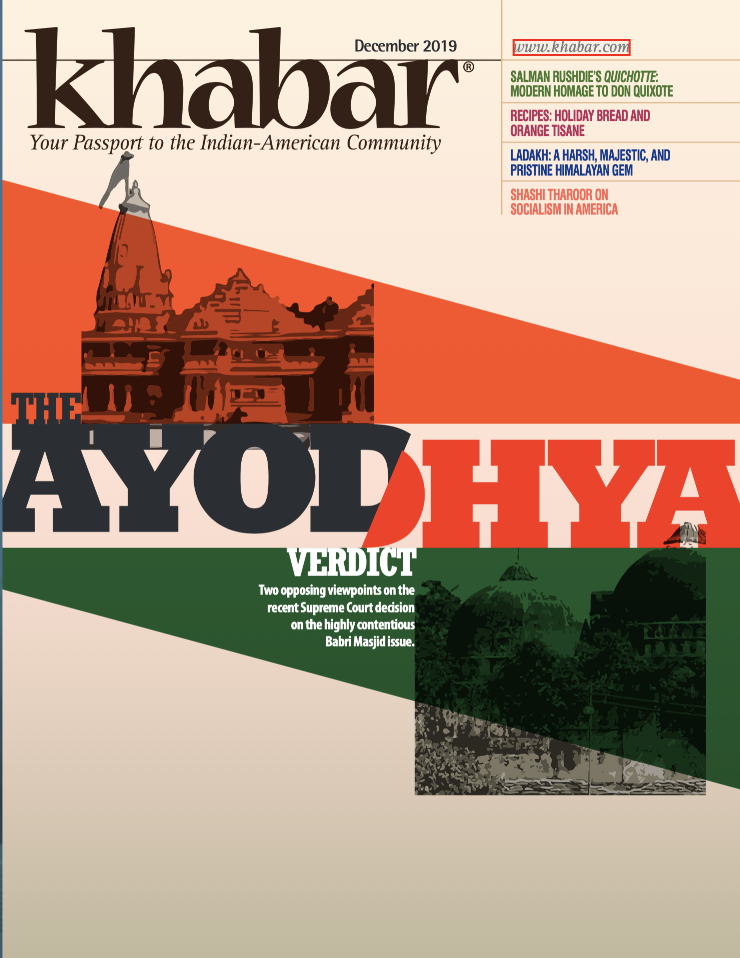
Other landmarks mentioned from the Atlanta Indian community specifically are not as familiar to the mainstream – the Atlanta Cricket League, the Al-Farooq Masjid mosque on Fourteen Avenue, the Indian newspaper Rajdhani, and the popular tea house Dr. Bombay’s Underwater Tea Party.

Meanwhile your character Quichotte (“pronounced key-SHOT,” according to Rushdie, alluding to a shot of heroine, but also comically voicing the homonym “quiche”) embarks on a quest across the country towards Miss Salma’s place of residence New York City, a destabilizing, anxiety-provoking tale of suspense until their fateful arranged meeting in Central Park. Late in Quichotte I think you spill the book’s meaning: “]I]t’s legitimate for a work of art made in the present time to say, we are being crippled by the culture we have made, by its most popular elements above all… And by stupidity and ignorance and bigotry, yes” (362). It seems the true-believer addict and the corrupt predator exploiting systems fit hand in glove in to wreak havoc.
WHICH BRINGS ME TO CERVANTES’ DON QUIXOTE. Whereas the latter-day Quichotte is besotted with TV celebrities, FaceBook, and other digital media, the original Don Quixote swears allegiance to tales of chivalry in which knights errant venture out in search of heroic adventures in the name of a mythic Lady on a pedestal. I’d always expected Don Quixote to be a whimsical troubadour goofily poking at windmills with a lance. Not so! While there is nonstop comedy, it surprised me to experience Don Quixote instead as a brutal egotist. His rigid adherence to archaic forms and the purely fictional idea of knighthood in an attempt to revive a “Golden Age” damages almost everyone he encounters.

Take the scene where he imagines, based on nothing, that two men escorting a carriage en route are instead abducting the lady inside the carriage and without hesitation beats them to a pulp. Don is not only violent but also an attention-grabbing self-promoter, a blowhard, abusive towards his staff (Sancho), a braggart hinting at sexual exploits while completely uninterested in actual women, an autocrat insisting on absolute loyalty and agreement with his distorted imaginings. Early in the first volume people such as his village neighbors try to bring Don down so that he can do no further damage, and he is finally trapped and carried home in a cage. In Volume II, Quixote escapes on a second quest, and one of the many jokes of this complex book is that many characters he encounters now have read volume I and are in on the joke – that the knight is a self-infatuated narcissist who can easily be flattered and tricked into ridiculous pursuits to his own humiliation. Don is an unsuccessful knight – only in his own mind is he successful – but his pursuits cause great damage.
When the Brotherhood police finally catch up with him and issue an arrest warrant, Don responds with braggadocio and swagger. Les Leighton reads this passage from Chapter XLV in the following sound clip:
The only way to subdue Don is to woo him with his own language and style. It is finally his compassionate neighbor dressing up as a knight (although knights as such did not really exist) and accosting our hero as the “never sufficiently praised Don Quixote of La Mancha” with the challenge of a duel that finally brings Don Quixote down. In the end, maybe it is Don’s incapability of seeing how he has done anything wrong that makes him the sort of innocent we know him as. He lacks experience, can’t help but be out of step, and has no ability to restrain himself. It is up to everyone else, from the crowds and royal patronages who ridicule him to the angry observers and victims who speak out, to the neighbors worried that his misdeeds will reflect badly on themselves, to do the right thing and get him home and out of the public arena.
 LIT Alive!