O’Neill and Mamdani project global sensibility in post-911 New York
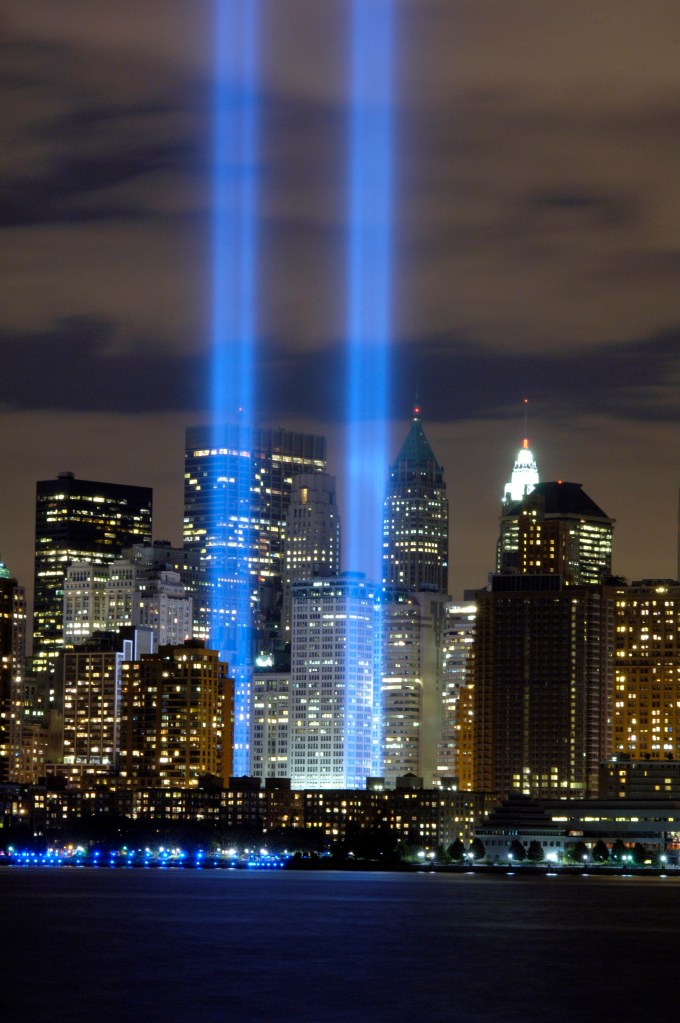
the five-year anniversary of 9/11. (U.S. Air Force photo/Denise Gould)
Of all literary sightings, seeing the name dropping of a literary title in an unexpected context could be the most common. But it still doesn’t happen very often, at least not to me. So that’s why my eyebrows went up last January while reading a New York Times op ed about the new mayor of New York City, Zohran Mamdani. The author, Sam Tanenhaus, suggested that Mamdani’s surprisingly rapid ascent had to do with cultural affinities – more than specific promises – and that the culture was the cosmopolitan milieu of Joseph O’Neill’s 2008 novel Netherland.
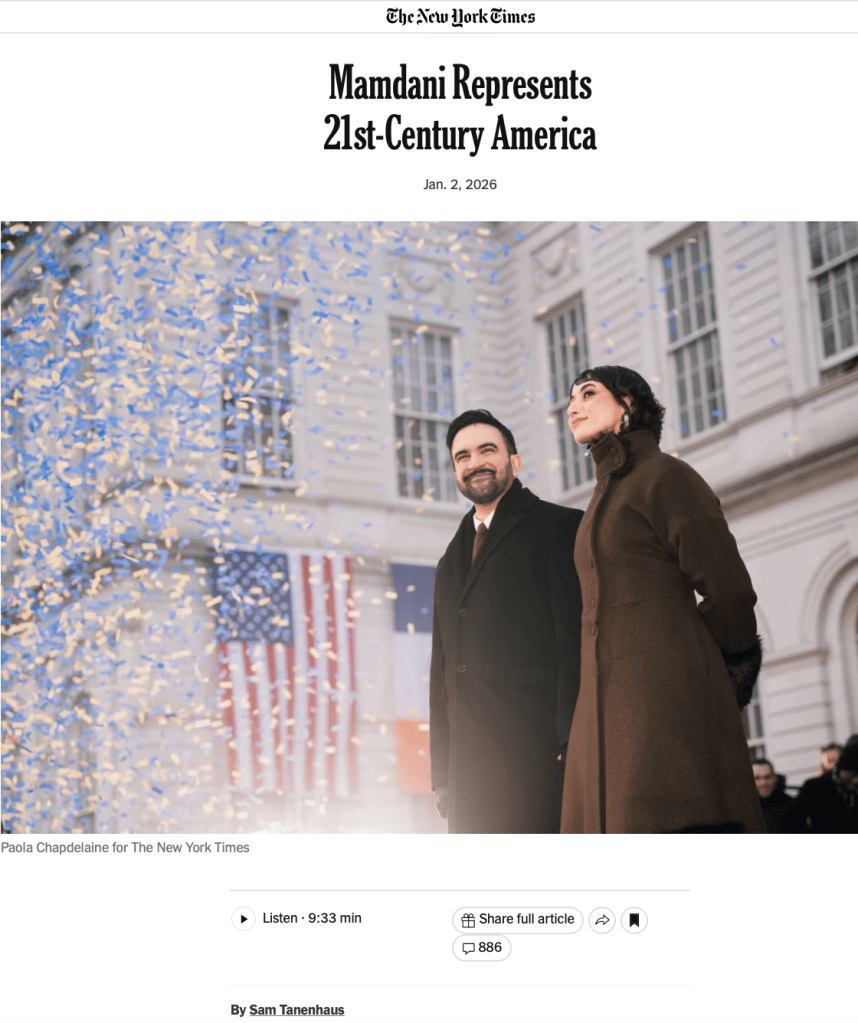
I relate to the point about the persuasive power of culture in politics. The articles about Mamdani that I read were always describing him as walking through the streets with crowds of people and invariably stopping for an interesting-sounding snack, such as adeni chai. What is adeni chai? After he was elected, I went in search of this hot spiced tea in Atlanta and found it at a place called Mokhaport Yemeni Coffee in Tucker (recommended!). I wanted to be part of the following. I remember discussing my reason for visiting with the proprietor who said, “You mean they talk about his taste in food and not his policies?” as though it was fetishizing. “No no,” I reassured him. “They talk about his policies too.”

This file is licensed under the Creative Commons Attribution-Share Alike 3.0 Unported license.
It seems that Tanenhaus was suggesting that Netherland depicts a similar aspirational culture to Mamdani’s followers:
To make sense of [Mandani’s] rise, we do well to set aside data-tested political science and look instead to the lessons of art. One useful primer is the novel “Netherland,” Joseph O’Neill’s bittersweet ode to New York in the aftermath of Sept. 11. Mr. O’Neill, like Mr. Mamdani, is a cosmopolitan New Yorker who seems handtooled for our century. His background is Irish and Turkish, and he grew up in the Netherlands [he also grew up in Mozambique and Iran]. He practiced law in England before moving to New York and becoming a leading fiction writer. / The book is mainly set in New York, with much of the action taking place in remote working-class districts outside Manhattan. The narrator, a displaced Dutchman and avid cricket player, travels the city to compete on fields like Walker Park’s on Staten Island, where cricket matches have been played since 1872. His teammates come from South Asia and the Caribbean [also Africa]. The team’s main booster, a Trinidadian, insists that cricket is “the first modern team sport in America” and “a bona fide American pastime.”
Tying Netherland to Mamdani is surprising and a bit disorienting, as the novel was published in 2008 – light years behind the Trump Administration’s heavy crackdown on immigrants and US world standing today. Tanenhaus seems to see Mamdani’s success as rooted in an immigrant-driven optimism and entrepreneurialism that we also see in the novel:
Some wonder how Mr. Mamdani was able to overcome the distrust of so many voters who disagreed with him on the Middle East and other divisive issues and bring them together. There, too,“Netherland” offers a clue. The world opened up by his new cricket connections enables the narrator to meet all sorts of “strictly local characters — lawyers and Realtors and painters and roofers and fishmongers and rabbis and secretaries and expediters.” This looks like Mr. Mamdani’s New York, down to the rabbis who might not have endorsed him but supported him. All these characters are drawn to a larger idea or hope of what New York — and America — may one day become… At a moment when so many seem to have lost faith in the American future and speak nostalgically of making the country great again, newcomers — immigrants, including New York City’s new mayor — continue to embrace the American dream.
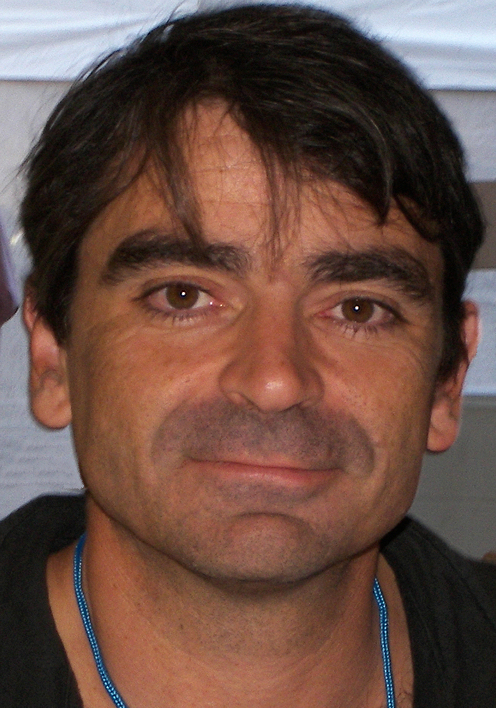
It’s interesting that Tanenhaus thinks that a cosmopolitan international figure is “handtooled for our century” when isolationism seems to be growing and the US is seizing resources from other countries, putting up trade barriers, and vilifying immigrants (“they’re eating the dogs, the cats”). I myself see a viable counter movement as world-problem focused, targeting climate change, AI, and global poverty so that conditions don’t deteriorate further. Many of the fresh ideas for solutions at this point will come from other countries and we should welcome them. O’Neill is very much a world writer; read, for example, his very provocative newest novel Godwin (2024) about the global trade of soccer players.
CC BY 4.0, Wikimedia Commons
The story framing Netherland is that of a shaky marriage; after the twin towers fall, the protagonist’s wife Rachel leaves New York and her husband with their child Jake to return to London. Left alone in New York City, Hans van den Broek (the protagonist) plays cricket and hangs around Chuck Ramkissoon, a charismatic Trinidadian whose ambition is to build a world-class cricket arena in Floyd Bennett Field in Brooklyn with international matches broadcasted globally. We know from the early pages that Hans eventually returns to his wife in London and resumes domestic life. O’Neill’s framing story is dull in comparison to the adventures within the “netherland” Hans tours with Chuck (“An intercontinental cast of characters passed through the old Cadillac”) and his deep memories of his youth in the Netherlands with his mother. The dullness of the framing could be a flaw of the novel, or it could be that O’Neill is demonstrating that internationalism and globalism are far more interesting, exciting, and meaningful than domestic retreat.
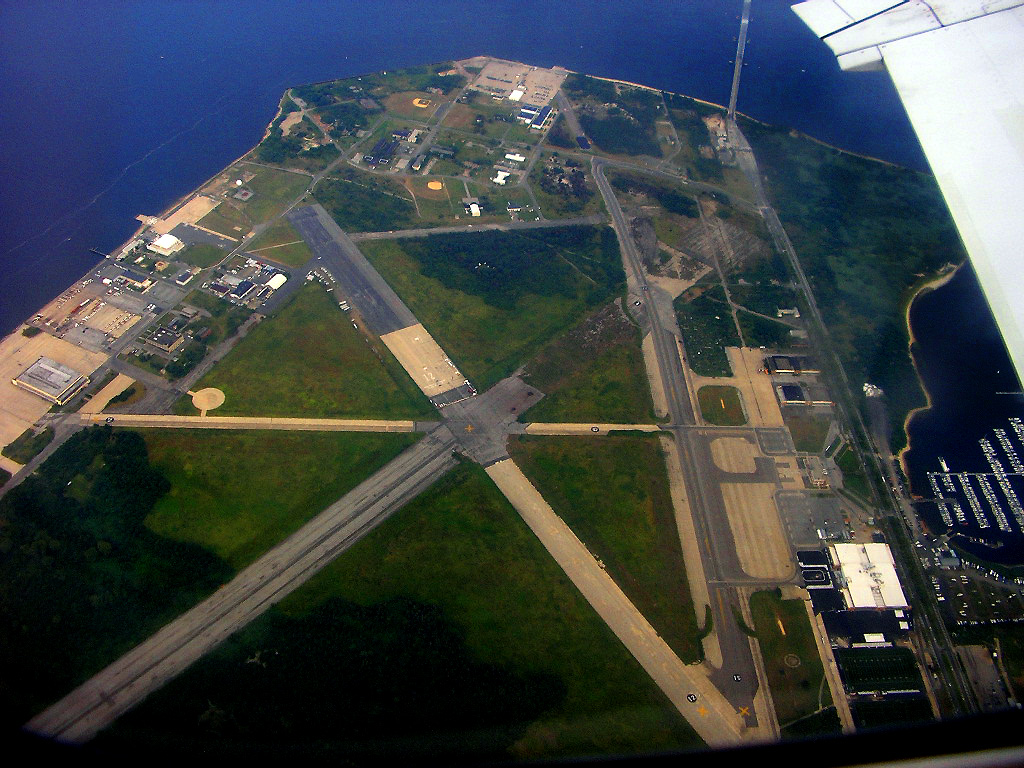
his New York Cricket Arena. A field of dreams. (public domain)
But this global sensibility is being tamped down today, not encouraged much at all – mainstream media for example, gives us almost no global news. And this sensibility is not going to grow without encouragement in rural America. Traveling military personnel, world sports, social studies, foreign languages, and global cuisine are possible avenues for cultivating a larger world view.
Netherland generated a lot of discussion when published; Zadie Smith, for example, critiqued O’Neill for perpetuating an outdated form of literary realism with embedded elitist assumptions. It’s true that the language is extremely old fashioned. But Hans is a European looking at the US, and his internal voice contrasts with the lively slang of the intercontinental cast of characters, which seems to be part of the point.
Hans is, in fact, from The Netherlands (early capitalists, colonialists, and slave owners who settled “New Amsterdam” in the 17th century not far from where the World Trade Center stood) and is by profession an oil and gas equities trader at a bank, so his symbol as the old world seems obvious. Through his own foreign status and previous exposure to cricket, Hans gets close to the non-European immigrant wheelers, dealers, strivers, around the edges of the gleaming metropolis who support much of its infrastructure, and he gains access to both glamour and danger – we learn in the early pages that Chuck is eventually murdered.
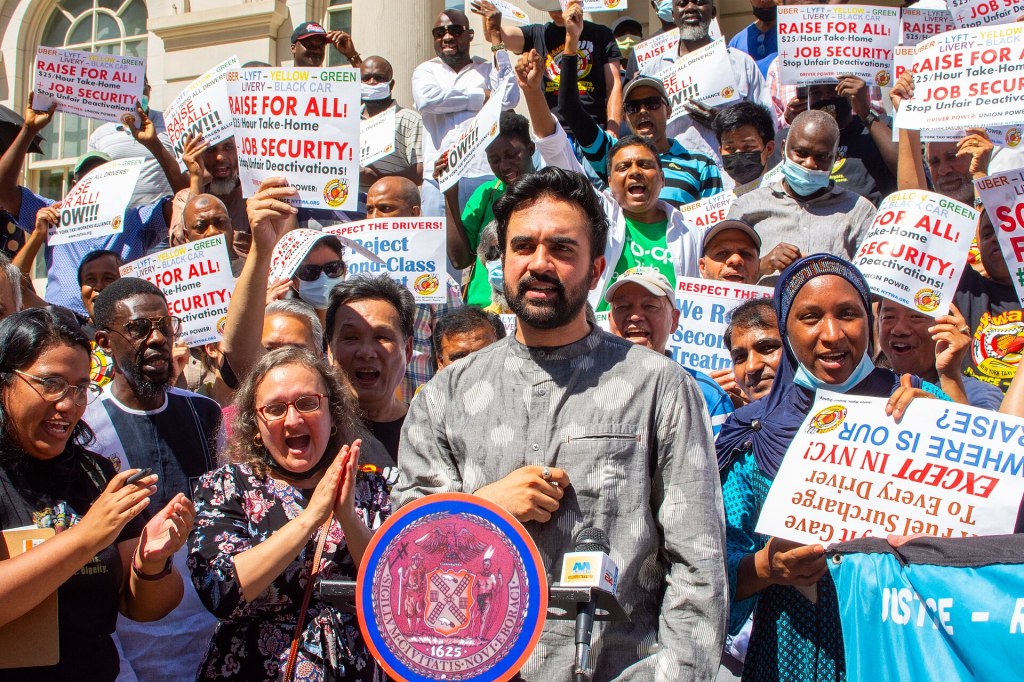
Hans’s surname calls attention to the theme of excavation or going under the surface. I looked up “Broek” and it means “pants” – extending even to “underpants”! There are many “under” aspects of the story. I think O’Neill is pointing out the chance to either recognize what subterranean mechanics lie underneath power structures – or continue the advantage-taking status quo that is making the rich richer and the poor poorer, at one’s own peril.