Netherland

O’Neill and Mamdani project global sensibility in post-911 New York
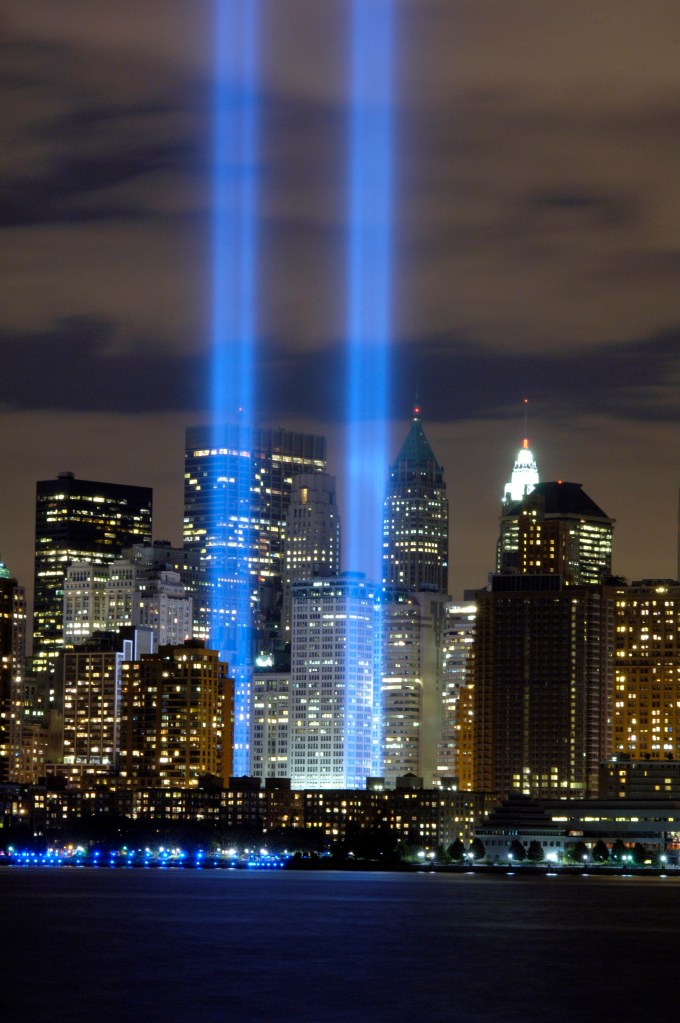
Twin towers in light. This photo was taken from Liberty State Park, N.J., Sept. 11, 2006,
the five-year anniversary of 9/11. (U.S. Air Force photo/Denise Gould)

Of all literary sightings, seeing the name dropping of a literary title in an unexpected context could be the most common. But it still doesn’t happen very often, at least not to me. So that’s why my eyebrows went up last January while reading a New York Times op ed about the new mayor of New York City, Zohran Mamdani. The author, Sam Tanenhaus, suggested that Mamdani’s surprisingly rapid ascent had to do with cultural affinities – more than specific promises – and that the culture was the cosmopolitan milieu of Joseph O’Neill’s 2008 novel Netherland.   
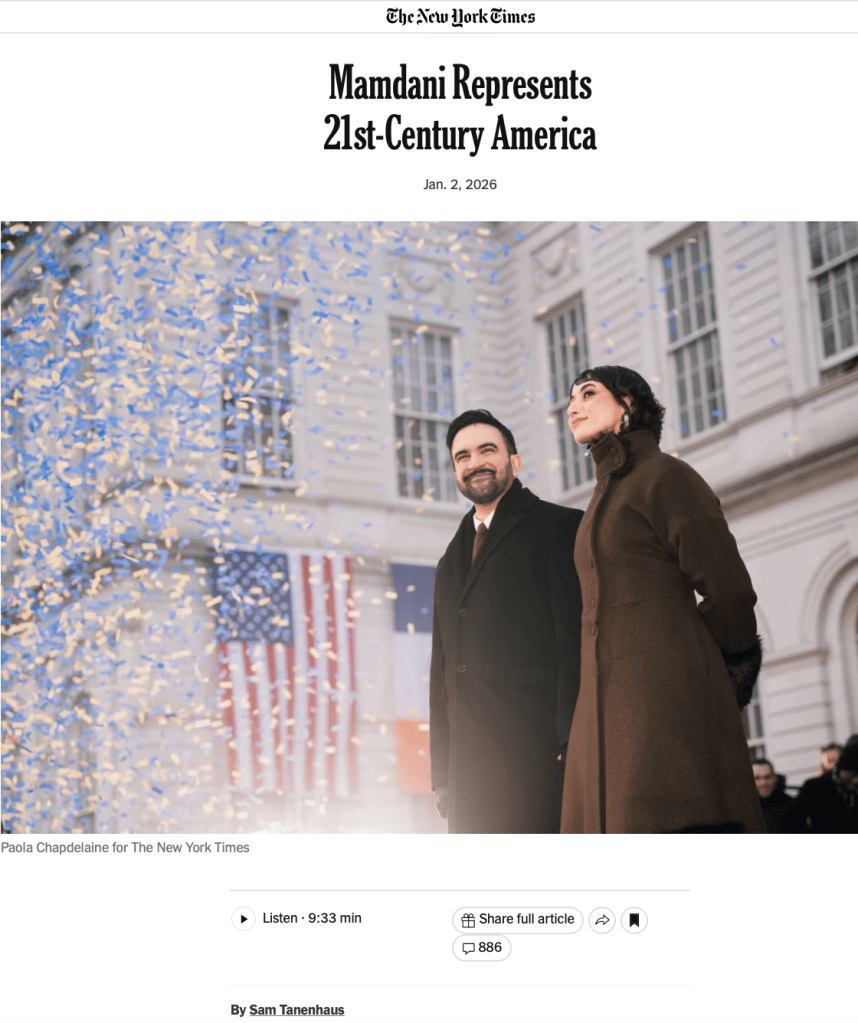
Screenshot of op-ed in New York Times by Sam Tanenhaus referencing Joseph O’Neill’s novel Netherland

I relate to the point about the persuasive power of culture in politics. The articles about Mamdani that I read were always describing him as walking through the streets with crowds of people and invariably stopping for an interesting-sounding snack, such as adeni chai. What is adeni chai? After he was elected, I went in search of this hot spiced tea in Atlanta and found it at a place called Mokhaport Yemeni Coffee in Tucker (recommended!). I wanted to be part of the following. I remember discussing my reason for visiting with the proprietor who said, “You mean they talk about his taste in food and not his policies?” as though it was fetishizing. “No no,” I reassured him. “They talk about his policies too.”

‘Chai’ (Hindi for Tea) served in a glass mug in India, Ahmad Faiz Mustafa.
This file is licensed under the Creative Commons Attribution-Share Alike 3.0 Unported license.

It seems that Tanenhaus was suggesting that Netherland depicts a similar aspirational culture to Mamdani’s followers:

To make sense of [Mandani’s] rise, we do well to set aside data-tested political science and look instead to the lessons of art. One useful primer is the novel “Netherland,” Joseph O’Neill’s bittersweet ode to New York in the aftermath of Sept. 11. Mr. O’Neill, like Mr. Mamdani, is a cosmopolitan New Yorker who seems handtooled for our century. His background is Irish and Turkish, and he grew up in the Netherlands [he also grew up in Mozambique and Iran]. He practiced law in England before moving to New York and becoming a leading fiction writer. / The book is mainly set in New York, with much of the action taking place in remote working-class districts outside Manhattan. The narrator, a displaced Dutchman and avid cricket player, travels the city to compete on fields like Walker Park’s on Staten Island, where cricket matches have been played since 1872. His teammates come from South Asia and the Caribbean [also Africa]. The team’s main booster, a Trinidadian, insists that cricket is “the first modern team sport in America” and “a bona fide American pastime.”

Tying Netherland to Mamdani is surprising and a bit disorienting, as the novel was published in 2008 – light years behind the Trump Administration’s heavy crackdown on immigrants and US world standing today. Tanenhaus seems to see Mamdani’s success as rooted in an immigrant-driven optimism and entrepreneurialism that we also see in the novel:

Some wonder how Mr. Mamdani was able to overcome the distrust of so many voters who disagreed with him on the Middle East and other divisive issues and bring them together. There, too,“Netherland” offers a clue. The world opened up by his new cricket connections enables the narrator to meet all sorts of “strictly local characters — lawyers and Realtors and painters and roofers and fishmongers and rabbis and secretaries and expediters.” This looks like Mr. Mamdani’s New York, down to the rabbis who might not have endorsed him but supported him. All these characters are drawn to a larger idea or hope of what New York — and America — may one day become… At a moment when so many seem to have lost faith in the American future and speak nostalgically of making the country great again, newcomers — immigrants, including New York City’s new mayor — continue to embrace the American dream.

It’s interesting that Tanenhaus thinks that a cosmopolitan international figure is “handtooled for our century” when isolationism seems to be growing and the US is seizing resources from other countries, putting up trade barriers, and vilifying immigrants (“they’re eating the dogs, the cats”). I myself see a viable counter movement as world-problem focused, targeting climate change, AI, and global poverty so that conditions don’t deteriorate further. Many of the fresh ideas for solutions at this point will come from other countries and we should welcome them. O’Neill is very much a world writer; read, for example, his very provocative newest novel Godwin (2024) about the global trade of soccer players.

Author Joseph O’Neill at the 2010 Texas Book Festival in Austin, Texas. Larry D. Moore, 
CC BY 4.0, Wikimedia Commons

The story framing Netherland is that of a shaky marriage; after the twin towers fall, the protagonist’s wife Rachel leaves New York and her husband with their child Jake to return to London. Left alone in New York City, Hans van den Broek (the protagonist) plays cricket and hangs around Chuck Ramkissoon, a charismatic Trinidadian whose ambition is to build a world-class cricket arena in Floyd Bennett Field in Brooklyn with international matches broadcasted globally. We know from the early pages that Hans eventually returns to his wife in London and resumes domestic life. O’Neill’s framing story is dull in comparison to the adventures within the “netherland” Hans tours with Chuck (“An intercontinental cast of characters passed through the old Cadillac”) and his deep memories of his youth in the Netherlands with his mother. The dullness of the framing could be a flaw of the novel, or it could be that O’Neill is demonstrating that internationalism and globalism are far more interesting, exciting, and meaningful than domestic retreat.

Floyd Bennett Field in Brooklyn, NY, where Chuck Ramkissoon intended to build
his New York Cricket Arena. A field of dreams. (public domain)

But this global sensibility is being tamped down today, not encouraged much at all – mainstream media for example, gives us almost no global news. And this sensibility is not going to grow without encouragement in rural America. Traveling military personnel, world sports, social studies, foreign languages, and global cuisine are possible avenues for cultivating a larger world view.

Netherland generated a lot of discussion when published; Zadie Smith, for example, critiqued O’Neill for perpetuating an outdated form of literary realism with embedded elitist assumptions. It’s true that the language is extremely old fashioned. But Hans is a European looking at the US, and his internal voice contrasts with the lively slang of the intercontinental cast of characters, which seems to be part of the point.

Hans is, in fact, from The Netherlands (early capitalists, colonialists, and slave owners who settled “New Amsterdam” in the 17th century not far from where the World Trade Center stood) and is by profession an oil and gas equities trader at a bank, so his symbol as the old world seems obvious. Through his own foreign status and previous exposure to cricket, Hans gets close to the non-European immigrant wheelers, dealers, strivers, around the edges of the gleaming metropolis who support much of its infrastructure, and he gains access to both glamour and danger – we learn in the early pages that Chuck is eventually murdered.
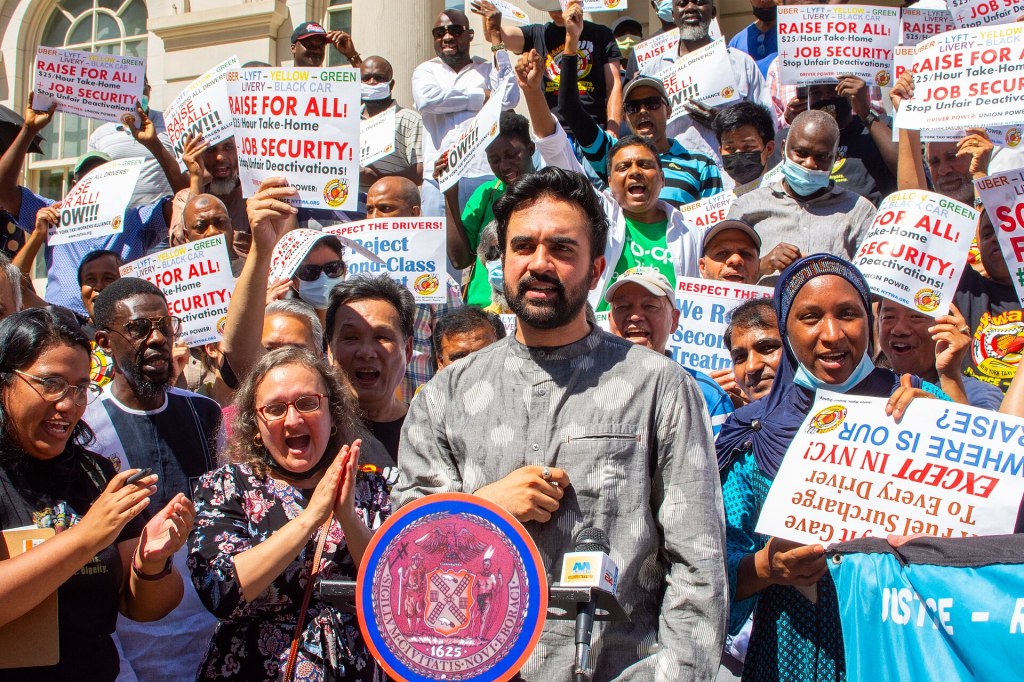
Assemblyman Zohran Mamdani @ Taxi Workers Alliance Rally @ City Hall, 2022, by Informed Images.

Hans’s surname calls attention to the theme of excavation or going under the surface. I looked up “Broek” and it means “pants” – extending even to “underpants”! There are many “under” aspects of the story. I think O’Neill is pointing out the chance to either recognize what subterranean mechanics lie underneath power structures – or continue the advantage-taking status quo that is making the rich richer and the poor poorer, at one’s own peril.
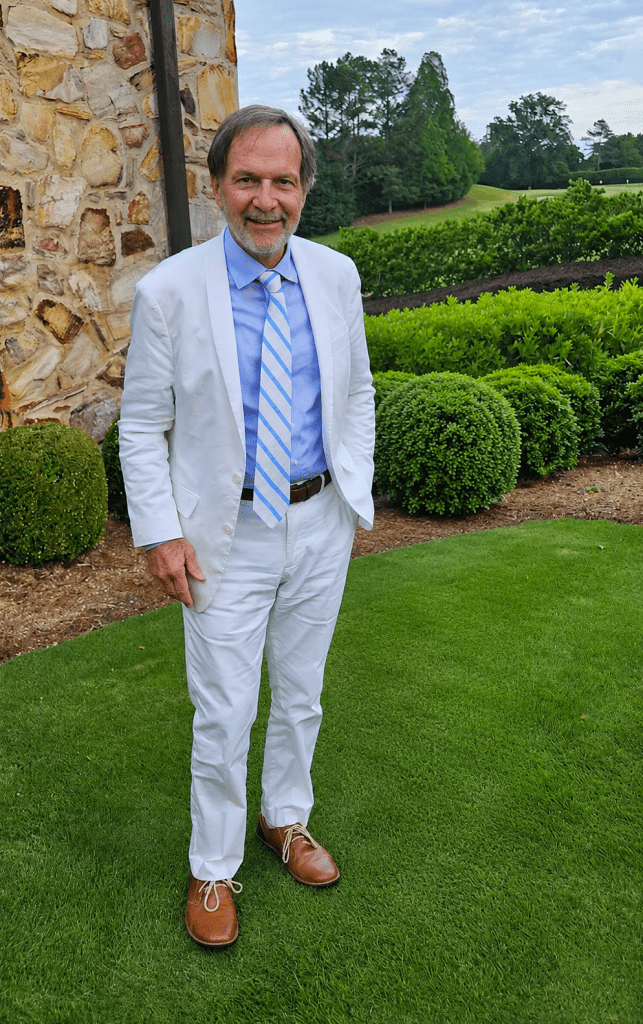
The Man in the White Suit

Economist novelist Jonathan Wight makes a statement

Jonathan Wight, April 2026 (courtesy of the Wight)

I was at a wedding in April when a man in a striking white suit walked down the aisle and sat among the guests. The next day I caught up with him at the wedding brunch. 

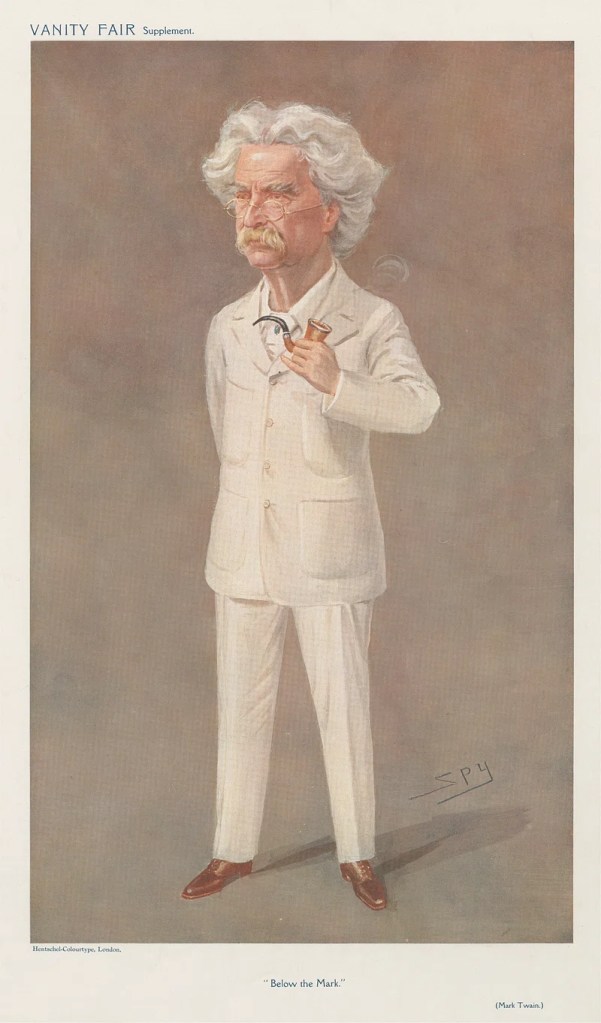
“Mark Twain?” I asked, referring to one novelist who always wore a white suit. 

“Tom Wolfe,” he replied, referring to another. 

The man was Jonathan Wight, a just-retired economics professor from the University of Richmond who mentioned that he had published a novel in 2001 called Saving Adam Smith. This information threw me for a loop.

How well I remember Adam Smith from my one and only economics class in high school in Palo Alto! The teacher beat it into us that “time is money” and that an unfettered free market is necessary because Smith’s “invisible hand” would sort everything out in the most beneficial way to society. When Ronald Reagan became president, I understand where those ideas came from.

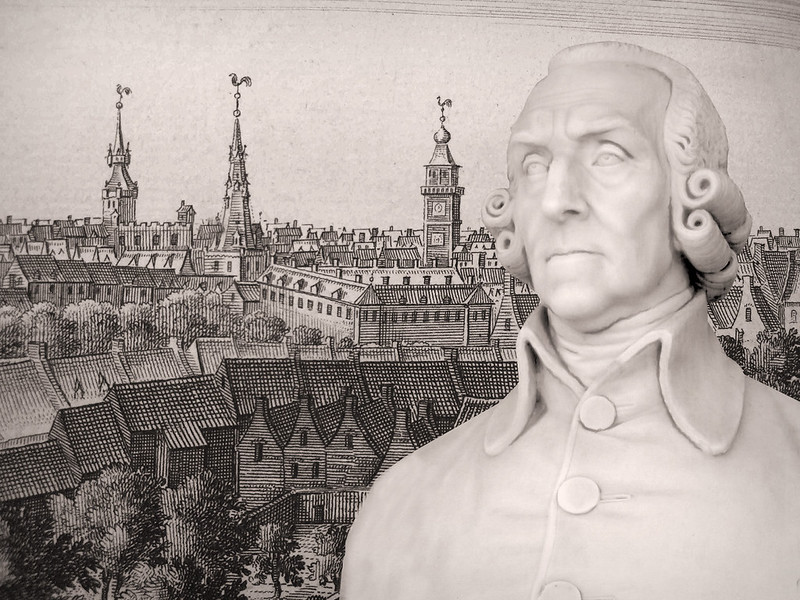
Adam Smith, author of The Theory of Moral Sentiments and The Wealth of Nations (WN). This year, 2026, is the 250th anniversary of WN. (Public domain, CC0 1.0 Deed)

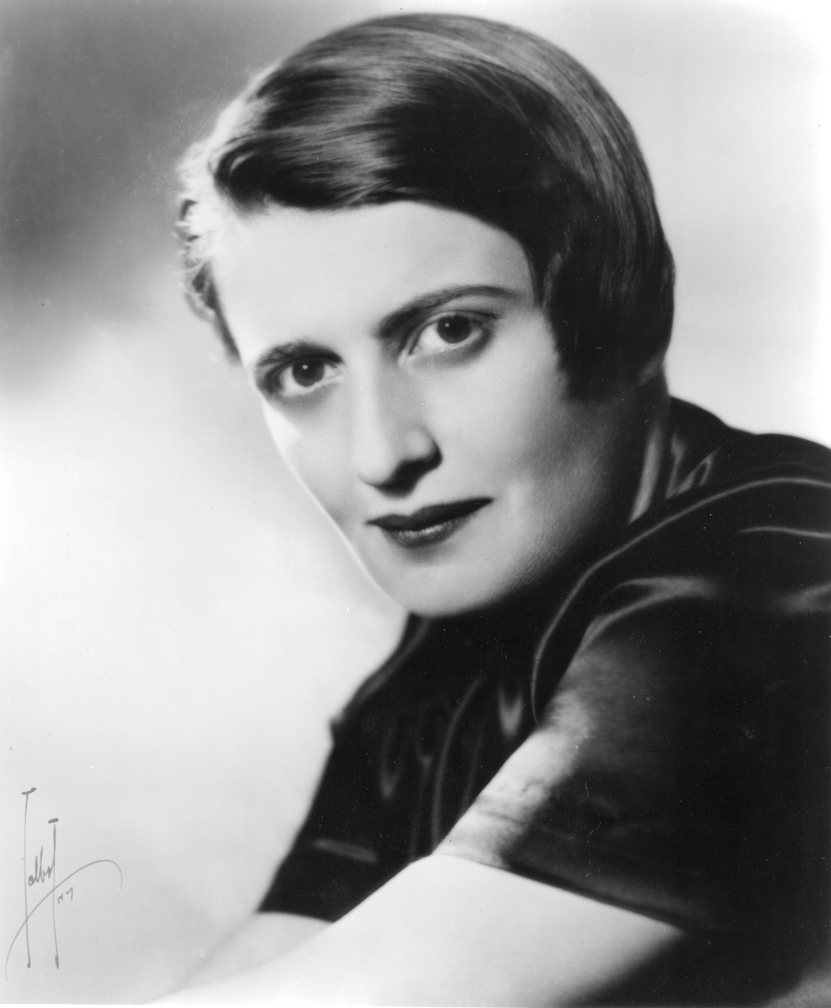
“A lot of what you hear about Smith is wrong,” Wight said, munching on his bagel. “This idea that it’s all about unfettered greed and allowing people to do whatever they want and somehow the magical outcome for society will pop up at the other end, that is just farcical.” He later explained that one of the main proponents of this depiction is Ayn Rand (author of The Fountainhead): “Ayn Rand inspired a lot of people from the 20th century to think that Adam Smith endorsed greed and zero government, and that’s just a complete misreading.”

The woman in the black suit – Ayn Rand (public domain)

In Wight’s novel, the 18th century Scottish economist Adam Smith rises from the dead in protest and resurrects himself inside Harold Timms, a Romanian automobile mechanic living in Fredericksburg, Virginia. Smith commandeers Timms over to the closest accessible economist, a young ABD graduate student, Richard Burns, who knows all about Smith (the caricature) even though he’s never read him. Burns, who is under the thumb of an arrogant laissez-faire economist, is about to reveal a formula at a conference to be attended by a multinational corporation who wants to buy the formula for a privatization deal in Russia. Adam Smith interrupts all that. After Smith convinces Burns that he is the real thing, the duo go on a cross-country road trip together to California where the conference will be held. On the road Smith dissuades Burns of the cliches about him and gives him a primer in Enlightenment ideas. It turns out that instead of reading Smith’s The Wealth of Nations, people should start with Smith’s The Theory of Moral Sentiments, the more important foundational text. Smith’s “invisible hand” assumes a competitive marketplace and no harm to people (like pollution). While on the road, the duo narrowly miss a number of terrorist attacks aimed at them. Amusingly, both characters egotistically think they are the target – Burns because of his formula and Smith because of his actual (moral) ideas that enemies (like Ayn Rand) would want to suppress. 

Wight thought that Saving Adam Smith and other writings have corrected the Smith caricature to the point where the novel would not need to be written. Today “you have to be very ignorant to hold onto the caricature view of Adam Smith,” he said. But since I had not gotten that memo, I appreciated Wight’s novel and the context he provided. It was also a stroke of luck just to sit next to an economist and be able to ask about the economic situation we are now in today. What about our world Smith would approve of?

Well, what’s very Smithian would be globalization over the past 50 years. That has dramatically raised a lot of people out of poverty. Hundreds of millions of Chinese and Indians have been lifted out of poverty by accessing the global trading system, and that’s quite deliberately Smithian. At the same time, he would not at all be happy about, for example, Russia invading Ukraine because he wrote about how deluded rulers were to think that they could make money by invading other countries and he wanted them to wake up from their delusional dreams. He thought that imperialism was a big waste of money and a benefit of the elites at the expense of the poor. So there’s a lot going on in the world that he would like and there’s a lot he wouldn’t like. He wouldn’t like how modern tech companies have become monopolized to the extent that they have.

In Wight’s novel I appreciated the amusing juxtaposition of the lofty Adam Smith inside highway truck stops and dive bars. When Wight showed the full gamut of social classes by having Richard and Adam Smith visit the Chicago opera and skewered pretentious attendees, he brought Tom Wolfe to mind.

Tom Wolfe  (Image by leyla, licensed as CC BY-SA 2.0)

“I’m thrilled that you mention me in the same paragraph as Tom Wolfe,” Wight replied. “I love and admire Tom Wolfe.”

Tom Wolfe himself was born and raised in Richmond, and Wight heard him give a reading at the University of Richmond on his architectural critique From Bauhaus to Our House (1981). Wolfe later turned to writing journalistic novels such as The Bonfire of the Vanities (1987), The Man in Full (1998), and I Am Charlotte Simmons (2004). Wight appreciates the immediacy of Wolfe’s “new journalism” as well as his satire – “he pops people’s bubbles of pomposity, which I appreciate.” 

Yet after the wedding Wight claimed that the literary allusion of his white suit was purely unintentional; the suit was his wife’s idea. After all, a white suit is completely impractical: “I mean you can only wear it once and then it has to go to the dry cleaners cuz it’s a white suit, it picks up everything.”  People who have written about the white suit such as Inigo Thomas make this same point: the white suit is wildly impractical and that is part of its allure. 

In the 1951 British film The Man in the White Suit (starring Alec Guinness) a chemist invents an indestructible fiber and turns it into a white suit that repels all dirt. Instead of being hailed as a hero, the chemist is vilified by factory owners and factory workers alike for threatening everybody’s livelihood – they rush to suppress the news of the fiber – not unlike the terrorists rushing to suppress the real, moral version of Adam Smith in Wight’s novel Saving Adam Smith. 

“The Man in the White Suit (1951)” by Susanlenox is marked with Public Domain Mark 1.0

But is a white suit ever just a white suit? When I mentioned the white suit to friends, they brought up other white suits that came to mind – Colonel Saunders at Kentucky Fried Chicken being the most common. Runner-ups were Tennessee Williams, Truman Capote, and Elvis Presley. No one mentioned the Pope or Hillary Clinton. All mentions were white southern American men. As most of the mentions were also literary, I content the white suit emits a strong literary signal. 

In recent decades there have been twists on the white suit, as the New York Times’ “The Return of Justin Jones and The White Suit” details. If the white suite stands for a southern gentleman, anybody else wearing it –  suffragettes, black men, and Democratic Congresswomen – are making both a comment about that power and claiming the power for themselves. When you wear a white suit, you will be noticed. 

I am now thinking of the rhetorical power of using dress deliberately and creatively to signal what you stand for and whom you admire. Who would you signal?

My delightful discussion with Jonathan Wight raises other big recurrent questions: What is a literary sighting? How much of a literary sighting is in the eye of the creator? And how much is in the eye of the beholder? 

Mark Twain (public domain)


More at LIT Alive!

A Chaos of Nonconformity

Ian McEwan joins a debate about the novel’s impact today

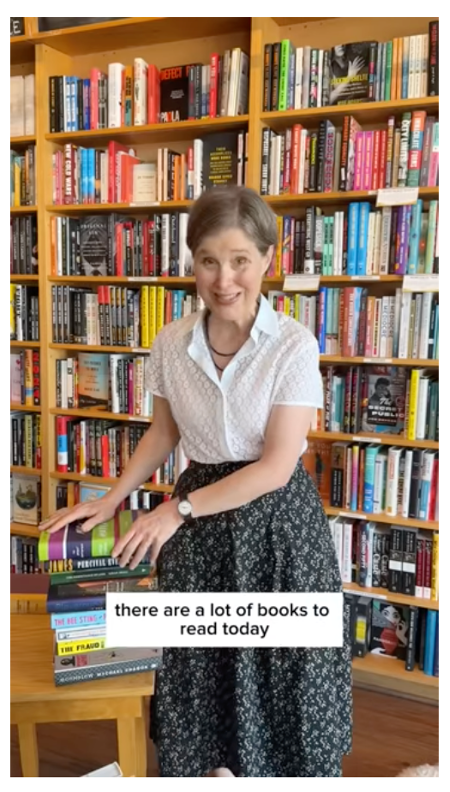
Screen shot of novelist Ann Patchett at Parnassus Books, Nashville, TN,
delivering News to You: Literature Isn’t Dead

A few months ago, a friend texted me News to You: Literature Isn’t Dead, Ann Patchett’s impassioned defense of literary fiction’s centrality to American culture today. The novelist, who runs the bookstore Parnassus in Nashville, Tennessee, was responding to an op-ed in the New York Times by the conservative political commentator David Brooks called When Novels Mattered about a period in American history ending in the 1980s when, he claims, literary authors were audacious, big in scope, unconstrained by political correctness and liberal conformity, and therefore actually mattered to the culture – unlike now.

Patchett hit back with 15 titles that she considers audacious and significant to culture today. They are (with my annotations added on when they were published and when they were set):

Continue reading A Chaos of Nonconformity