The Man in the White Suit

Economist novelist Jonathan Wight makes a statement

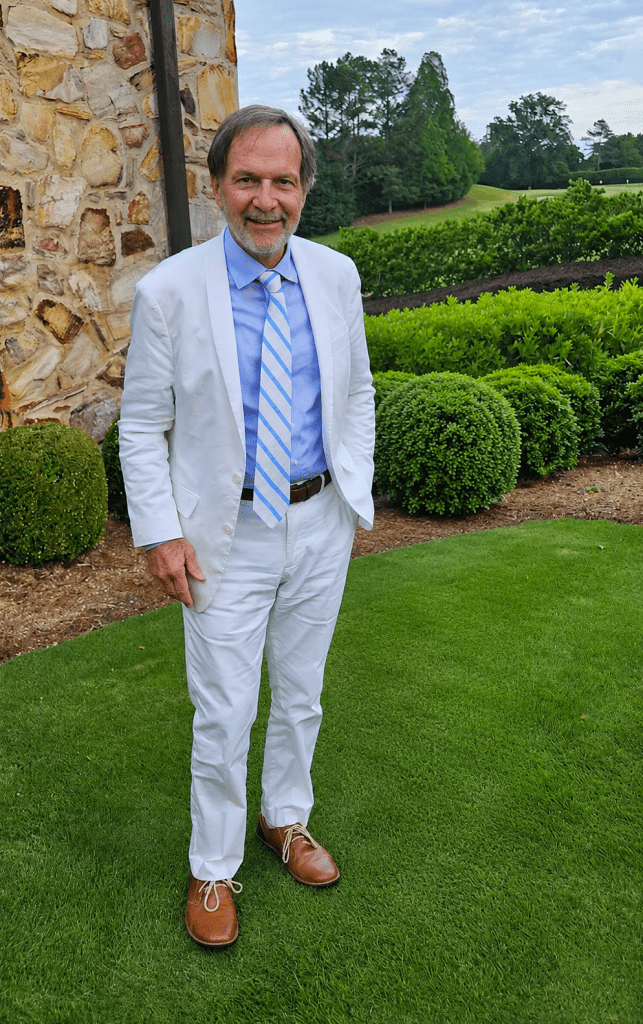
Jonathan Wight, April 2026 (courtesy of the Wight)

I was at a wedding in April when a man in a striking white suit walked down the aisle and sat among the guests. The next day I caught up with him at the wedding brunch. 

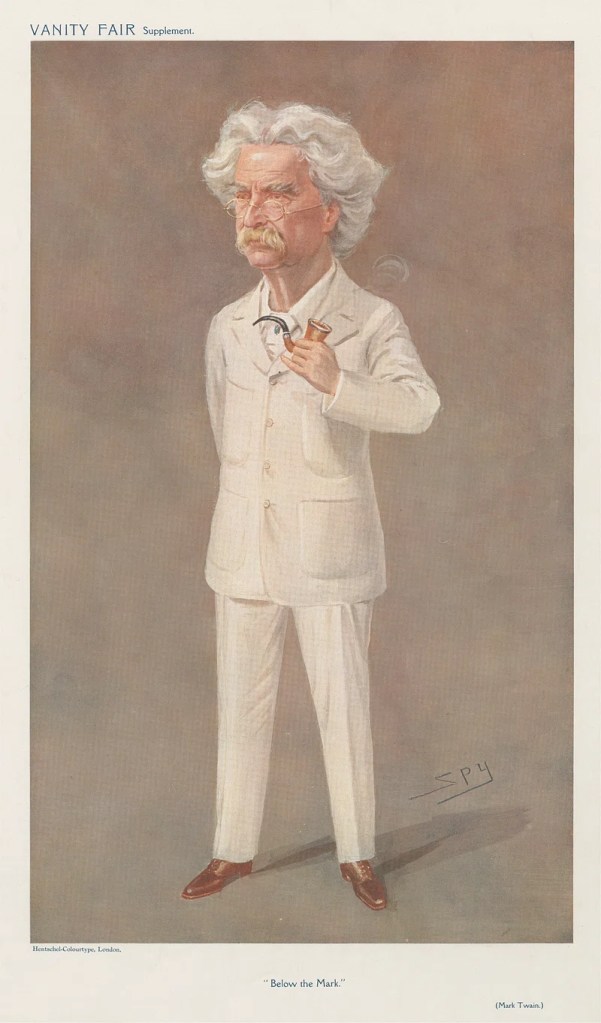
“Mark Twain?” I asked, referring to one novelist who always wore a white suit. 

“Tom Wolfe,” he replied, referring to another. 

The man was Jonathan Wight, a just-retired economics professor from the University of Richmond who mentioned that he had published a novel in 2001 called Saving Adam Smith. This information threw me for a loop.

How well I remember Adam Smith from my one and only economics class in high school in Palo Alto! The teacher beat it into us that “time is money” and that an unfettered free market is necessary because Smith’s “invisible hand” would sort everything out in the most beneficial way to society. When Ronald Reagan became president, I understand where those ideas came from.

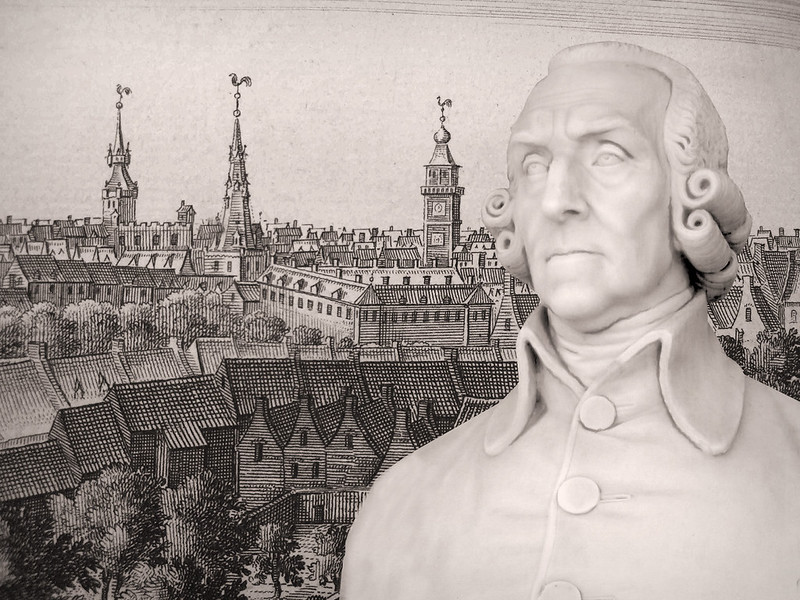
Adam Smith, author of The Theory of Moral Sentiments and The Wealth of Nations (WN). This year, 2026, is the 250th anniversary of WN. (Public domain, CC0 1.0 Deed)

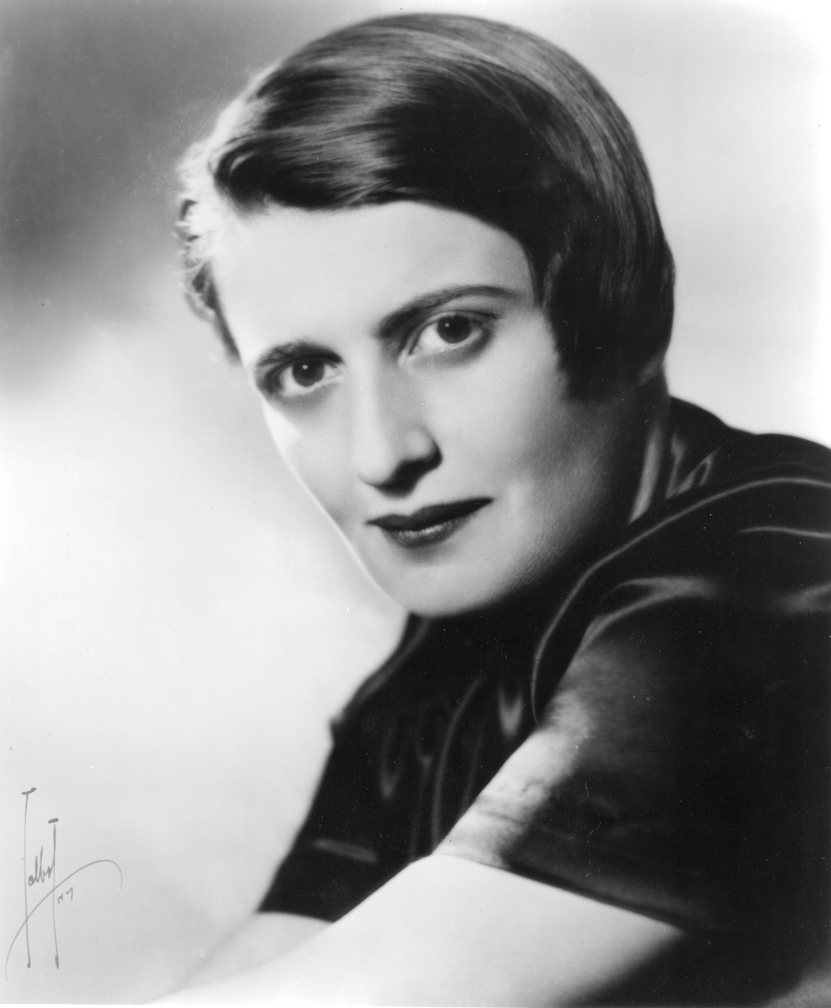
“A lot of what you hear about Smith is wrong,” Wight said, munching on his bagel. “This idea that it’s all about unfettered greed and allowing people to do whatever they want and somehow the magical outcome for society will pop up at the other end, that is just farcical.” He later explained that one of the main proponents of this depiction is Ayn Rand (author of The Fountainhead): “Ayn Rand inspired a lot of people from the 20th century to think that Adam Smith endorsed greed and zero government, and that’s just a complete misreading.”

The woman in the black suit – Ayn Rand (public domain)

In Wight’s novel, the 18th century Scottish economist Adam Smith rises from the dead in protest and resurrects himself inside Harold Timms, a Romanian automobile mechanic living in Fredericksburg, Virginia. Smith commandeers Timms over to the closest accessible economist, a young ABD graduate student, Richard Burns, who knows all about Smith (the caricature) even though he’s never read him. Burns, who is under the thumb of an arrogant laissez-faire economist, is about to reveal a formula at a conference to be attended by a multinational corporation who wants to buy the formula for a privatization deal in Russia. Adam Smith interrupts all that. After Smith convinces Burns that he is the real thing, the duo go on a cross-country road trip together to California where the conference will be held. On the road Smith dissuades Burns of the cliches about him and gives him a primer in Enlightenment ideas. It turns out that instead of reading Smith’s The Wealth of Nations, people should start with Smith’s The Theory of Moral Sentiments, the more important foundational text. Smith’s “invisible hand” assumes a competitive marketplace and no harm to people (like pollution). While on the road, the duo narrowly miss a number of terrorist attacks aimed at them. Amusingly, both characters egotistically think they are the target – Burns because of his formula and Smith because of his actual (moral) ideas that enemies (like Ayn Rand) would want to suppress. 

Wight thought that Saving Adam Smith and other writings have corrected the Smith caricature to the point where the novel would not need to be written. Today “you have to be very ignorant to hold onto the caricature view of Adam Smith,” he said. But since I had not gotten that memo, I appreciated Wight’s novel and the context he provided. It was also a stroke of luck just to sit next to an economist and be able to ask about the economic situation we are now in today. What about our world Smith would approve of?

Well, what’s very Smithian would be globalization over the past 50 years. That has dramatically raised a lot of people out of poverty. Hundreds of millions of Chinese and Indians have been lifted out of poverty by accessing the global trading system, and that’s quite deliberately Smithian. At the same time, he would not at all be happy about, for example, Russia invading Ukraine because he wrote about how deluded rulers were to think that they could make money by invading other countries and he wanted them to wake up from their delusional dreams. He thought that imperialism was a big waste of money and a benefit of the elites at the expense of the poor. So there’s a lot going on in the world that he would like and there’s a lot he wouldn’t like. He wouldn’t like how modern tech companies have become monopolized to the extent that they have.

In Wight’s novel I appreciated the amusing juxtaposition of the lofty Adam Smith inside highway truck stops and dive bars. When Wight showed the full gamut of social classes by having Richard and Adam Smith visit the Chicago opera and skewered pretentious attendees, he brought Tom Wolfe to mind.

Tom Wolfe  (Image by leyla, licensed as CC BY-SA 2.0)

“I’m thrilled that you mention me in the same paragraph as Tom Wolfe,” Wight replied. “I love and admire Tom Wolfe.”

Tom Wolfe himself was born and raised in Richmond, and Wight heard him give a reading at the University of Richmond on his architectural critique From Bauhaus to Our House (1981). Wolfe later turned to writing journalistic novels such as The Bonfire of the Vanities (1987), The Man in Full (1998), and I Am Charlotte Simmons (2004). Wight appreciates the immediacy of Wolfe’s “new journalism” as well as his satire – “he pops people’s bubbles of pomposity, which I appreciate.” 

Yet after the wedding Wight claimed that the literary allusion of his white suit was purely unintentional; the suit was his wife’s idea. After all, a white suit is completely impractical: “I mean you can only wear it once and then it has to go to the dry cleaners cuz it’s a white suit, it picks up everything.”  People who have written about the white suit such as Inigo Thomas make this same point: the white suit is wildly impractical and that is part of its allure. 

In the 1951 British film The Man in the White Suit (starring Alec Guinness) a chemist invents an indestructible fiber and turns it into a white suit that repels all dirt. Instead of being hailed as a hero, the chemist is vilified by factory owners and factory workers alike for threatening everybody’s livelihood – they rush to suppress the news of the fiber – not unlike the terrorists rushing to suppress the real, moral version of Adam Smith in Wight’s novel Saving Adam Smith

“The Man in the White Suit (1951)” by Susanlenox is marked with Public Domain Mark 1.0

But is a white suit ever just a white suit? When I mentioned the white suit to friends, they brought up other white suits that came to mind – Colonel Saunders at Kentucky Fried Chicken being the most common. Runner-ups were Tennessee Williams, Truman Capote, and Elvis Presley. No one mentioned the Pope or Hillary Clinton. All mentions were white southern American men. As most of the mentions were also literary, I content the white suit emits a strong literary signal. 

In recent decades there have been twists on the white suit, as the New York Times’ “The Return of Justin Jones and The White Suit” details. If the white suite stands for a southern gentleman, anybody else wearing it –  suffragettes, black men, and Democratic Congresswomen – are making both a comment about that power and claiming the power for themselves. When you wear a white suit, you will be noticed. 

I am now thinking of the rhetorical power of using dress deliberately and creatively to signal what you stand for and whom you admire. Who would you signal?

My delightful discussion with Jonathan Wight raises other big recurrent questions: What is a literary sighting? How much of a literary sighting is in the eye of the creator? And how much is in the eye of the beholder? 

Mark Twain (public domain)


More at LIT Alive!

Dinner at Table & Main

William Faulkner & Susan Rebecca White join us

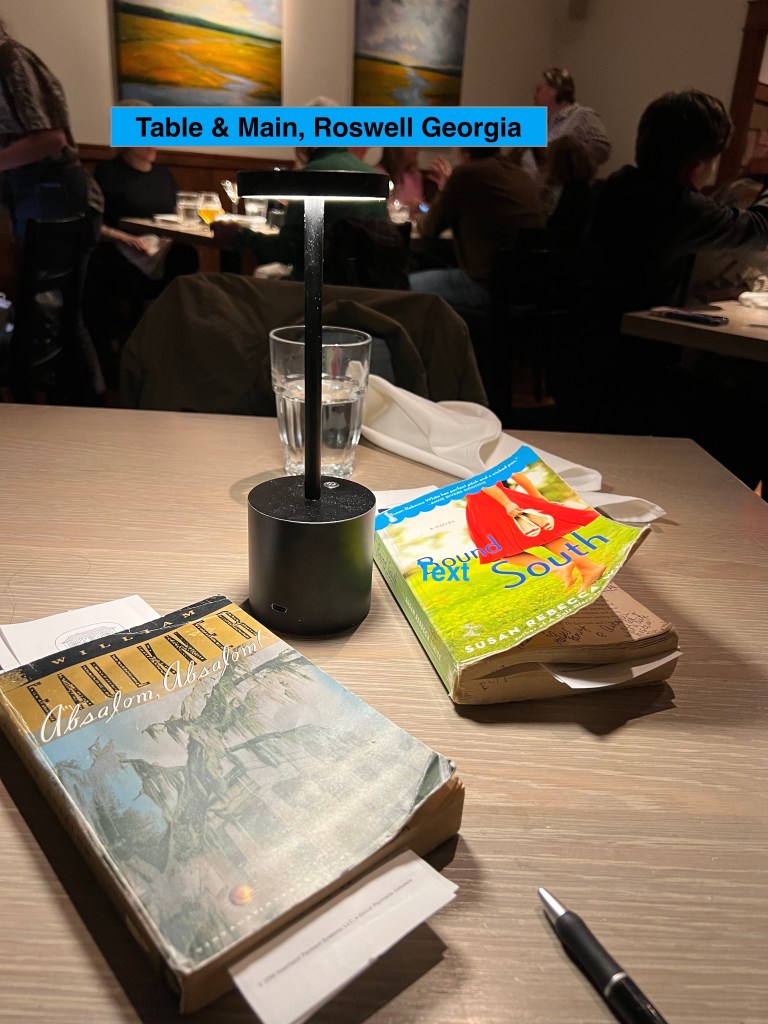
Not long ago I made an outing to Roswell, Georgia, with Parul Kapur (author of Inside the Mirror). We’d been going on literary outings OTP (outside the perimeter of Atlanta) but this one was just an outing.  We had a lovely walk along the Chattahoochee River, popped in at the consignment store Board of Trade, and landed for dinner at the esteemed restaurant Table & Main, where Parul wanted to go because of its Michelin Bib Gourmand designation. That’s why it was so surprising when after a delicious spread of meatloaf, shrimp & grits, the vegetable plate, and wine, and after a nice literary conversation, the checks arrived tucked inside southern novels. The restaurant’s owner-operator Ryan Pernice later explained the gesture: “We find it makes guests happy at what would otherwise be a low point. No one likes getting the bill!” 

Our dinner checks delivered in southern lit at Table & Main (courtesy Parul Kapur)

Parul’s check was inside Absalom Absalom! (1936) by William Faulkner, which she hadn’t read. Mine was inside Bound South (2009) by Susan Rebecca White, which I hadn’t read but which, aptly, Parul had once reviewed.

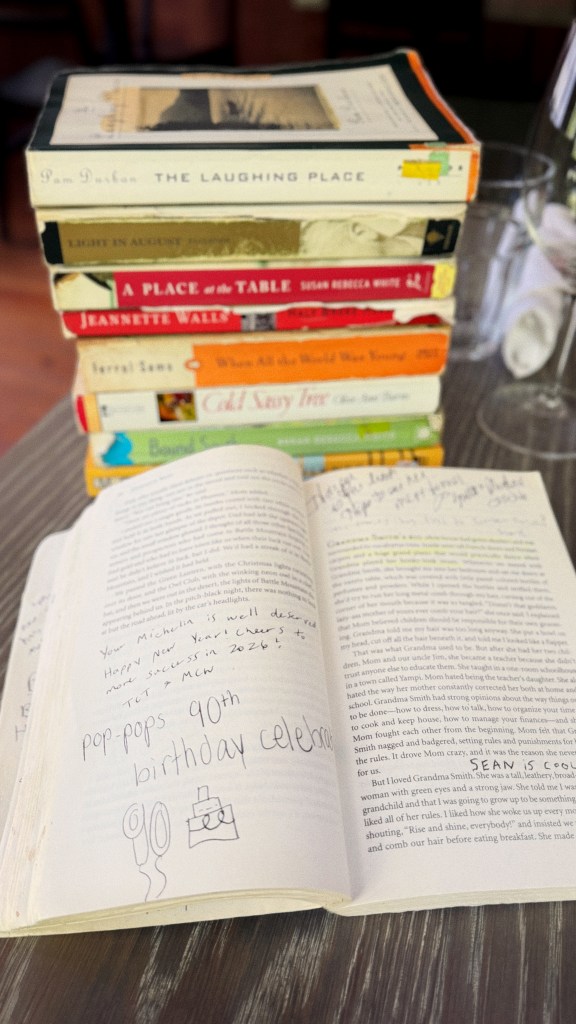
The books had some interesting comments written inside them by patrons at the restaurant. It turns out these “love notes” are a kind of tradition encouraged by the management.

Table & Main’s collection of southern lit, with an example of a “love note”
(courtesy of Ryan Pernice)

While someone else might see the delivery of checks inside books as just a novelty, I took it as an assignment! After all, it’s rare to take home substantive inspiration from a restaurant meal. I proposed to Parul that we each read the novels and have a conversation about them for this blog. She paused. “That would mean I’d have to read another book,” she reflected. As the 2025 winner of Georgia Author of the Year award for debut novel she was in the process of judging the 2026 nominees. “So no….” 

Instead I took the challenge myself and proceeded to read both books. And it was a challenge, as anyone who has tried to slog through Absalom Absalom! knows – 300 pages of dense prose from successive points of view slowly revealing the components of a convoluted plot, Biblical in scope – Quentin Compson’s story. In my college Faulkner course I’d thrown in the towel at Absalom Absalom! – I simply didn’t have the reference points, the literary maturity, or the understanding of how haunting legacies of the south are relevant today. It was so worthwhile to see the way it all comes together at the end, and I now am compelled to read it a second time to go deeper and also return to Faulkner’s The Sound and the Fury, a connected book. So thank you, Table & Main.

Pernice was impressed. “I don’t know that anyone would ever say that they were ‘delighted’ by Absalom Absalom!, and I applaud you for finishing it outside of college.” 

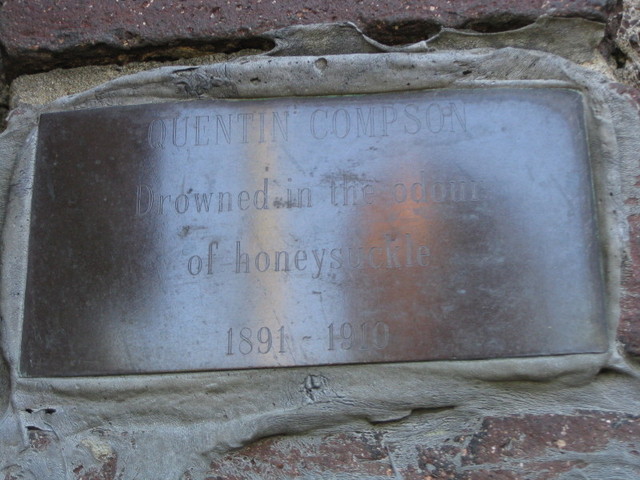
Another literary sighting can be had at the Anderson Bridge in Cambridge, Massachusetts at the place where Faulkner’s character Quentin Compson famously killed himself (in another Faulkner novel). The plaque reads, “QUENTIN COMPSON / Drowned in the odour of honeysuckle / 1891-1910” (public domain)

In a breach of etiquette I’m going to quote the book’s end, because honestly I see it more as a trailer than a spoiler for this now probably not-enough-read novel. The novel ends with Quentin’s damning words:

I don’t hate it [the South], he thought, panting in the cold air, the iron New England dark; I don’t. I don’t! I don’t hate it! I don’t hate it!

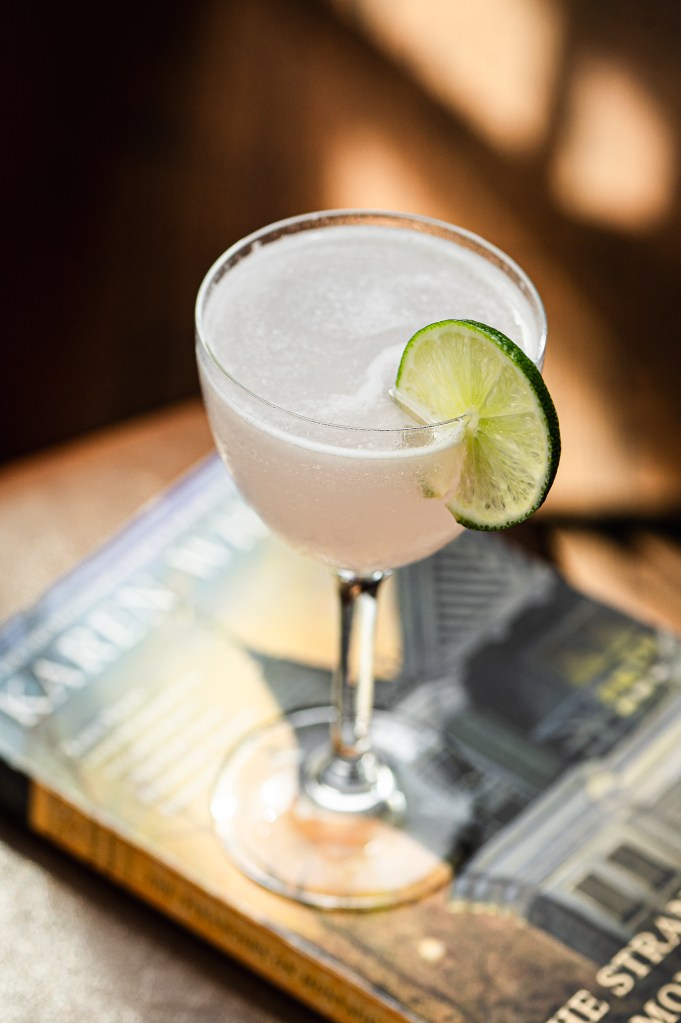
Sacred Harp Gimlet Cocktail at Table & Main (courtesy of Randi Curling)

More concretely, as a creative restaurateur, Pernice finds inspiration in the creation of Yoknapatawpha County, Mississippi, where many of Faulkner’s books are set:

What I love about his novels in relation to our restaurant is he created his own universe, that was very much based on facts but wasn’t a factual place … and so he’s another example of world building, where we talk in the restaurant a lot about every decision’s intentional, and every aspect of the art in the novel is intentional, and of course the food, the wine we choose, is all intentionally geared to make people feel a certain way in this world that we’ve created.

The beautiful interior of Table & Main (courtesy of Randi Curling)

After Absalom Absalom!, reading Bound Sound was a refreshing breeze. And, again, I have only the restaurant to thank for inspiring me to read the book. White’s humorous reckoning read like a primer on how to interpret white upper-class Atlanta. The novel speaks both to enduring customs (e.g., private schools, country clubs, black maids, keeping up appearances, glossing over the truth to maintain an illusion, and racial tension) and change (e.g., embracing gayness, outsider art, and a stint in San Francisco). I read many parts of Bound South aloud to my husband Les, and we laughed at the aptness of the references. Then Les asked if people would understand if they were not from Atlanta or had not lived there. Very good question.

I asked Pernice what he thought.

Well, isn’t that another hallmark of southern lit? There’s so many winks and nods to people who understand. To use a trope, the old southern ‘Bless her heart’: an author may write that and anyone not familiar with the south may take it at face value that they’re saying something kind when (in fact they aren’t). So it’s funny that southern lit has such a clubby mentality to it. 

I had a frisson of revelation. “Clubby” struck me the word I’ve been looking for ever since moving to Atlanta. Is southern lit clubby? That’s a very interesting question. But I do know that Atlanta and its environs are clubby. They run on clubs. And I’ve been asking around: Do others agree, is Atlanta a particularly clubby city? Yes, said the well-traveled Parul. Yes, said Les. Yes, I believe, said Susan Rebecca White. And yes, said others.

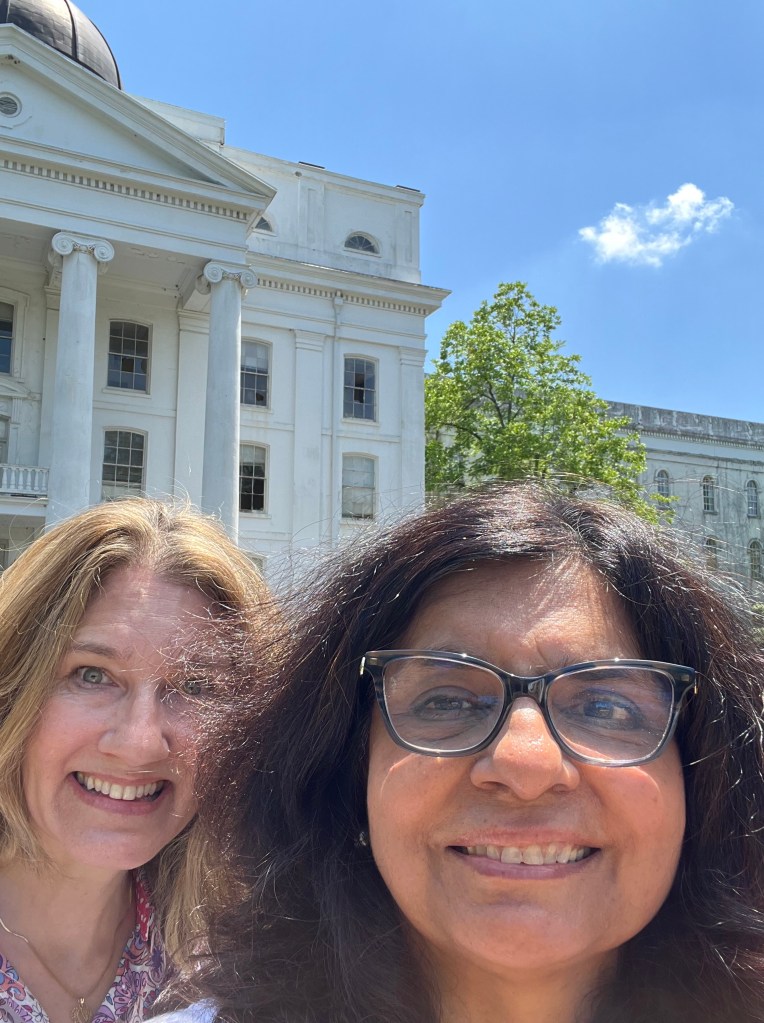
Ann & Parul on a literary outing to Milledgeville, GA (Flannery O’Connor country) 2025; at the ruins of the massive Central State (psychiatric) Hospital

I confess that clubby is perhaps my least favorite word. Where it might conjure to some the warm and cosy sense of belonging, to me it conjures the possibilities of exclusion. There is Atlanta’s old-money blue-blood club, for example, and then the many specific luxury golf and country clubs with entry fees ranging from $25,000 to $100,000+ with histories of excluding Blacks, Jew, and others. Tell me about a club and my first instinct is to run the other way.

So it was very interesting to me that when I asked Pernice what world he was building at Table & Main, he said:

I would describe it as simple seasonal southern. That’s our mantra there. Between that, which is our guiding north star, and the idea of creating the neighborhood clubhouse, which is a pretty Faulkner idea in and of itself, Table & Main was always supposed to be a gathering place by and for the community and I think we’ve delivered on that. At 15 years old I’m proud to see us come through with that vision. That’s our world, the neighborhood club house of Roswell. 

Here “club house” I think suggests a fun, not-too-fancy local gathering spot for people to come back to time and time again. I think that Pernice means “club house” in the best possible sense of the word. It made me think deeper. Want to or not, we all belong to clubs. There is the zip code club. The job club. Going to college has become an elite club. Zodiac signs and Myers-Briggs personality types are clubs, not to mention sports teams. To set about building a world that welcomes all is a mighty aspiration in our present world. And indeed, Parul and I felt completely comfortable and happy lingering at this lovely restaurant. I went home with an assignment and ended up with a better understanding of the south.

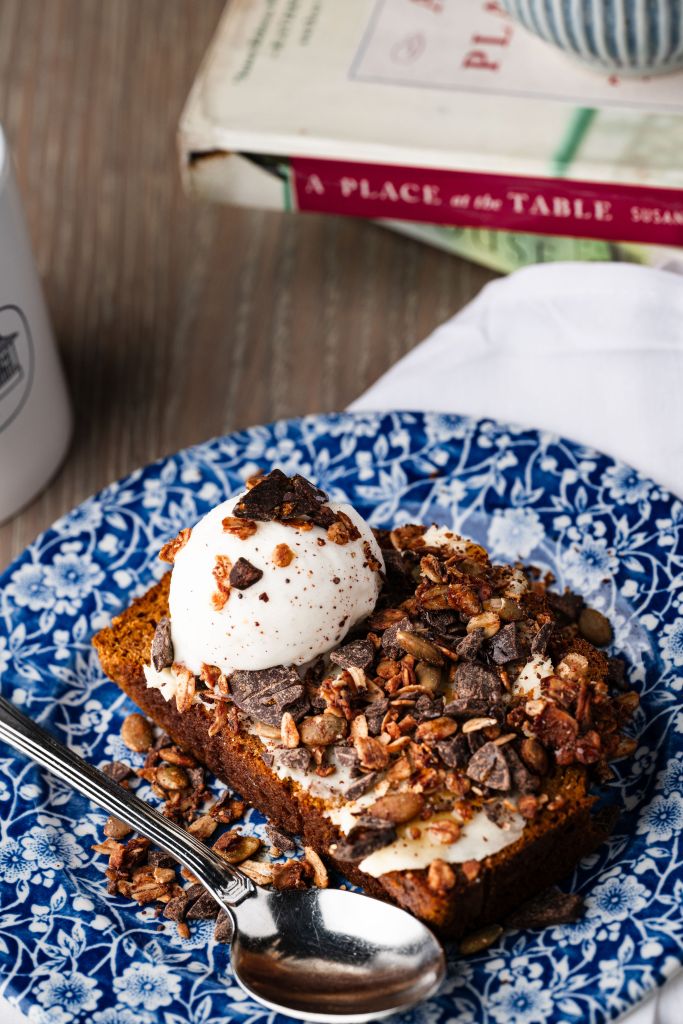
Bourbon Sweet Potato Cake at Table & Main (courtesy of Randi Curling)

More at LIT Alive!